Tecnología intersticial
A worker-owned full-stack engineering cooperative building technology for a better world.
Interstitial Technology is a worker-owned full-stack engineering cooperative based in Colorado, building software and hardware solutions for organizations working on climate, human rights, education, and the arts.
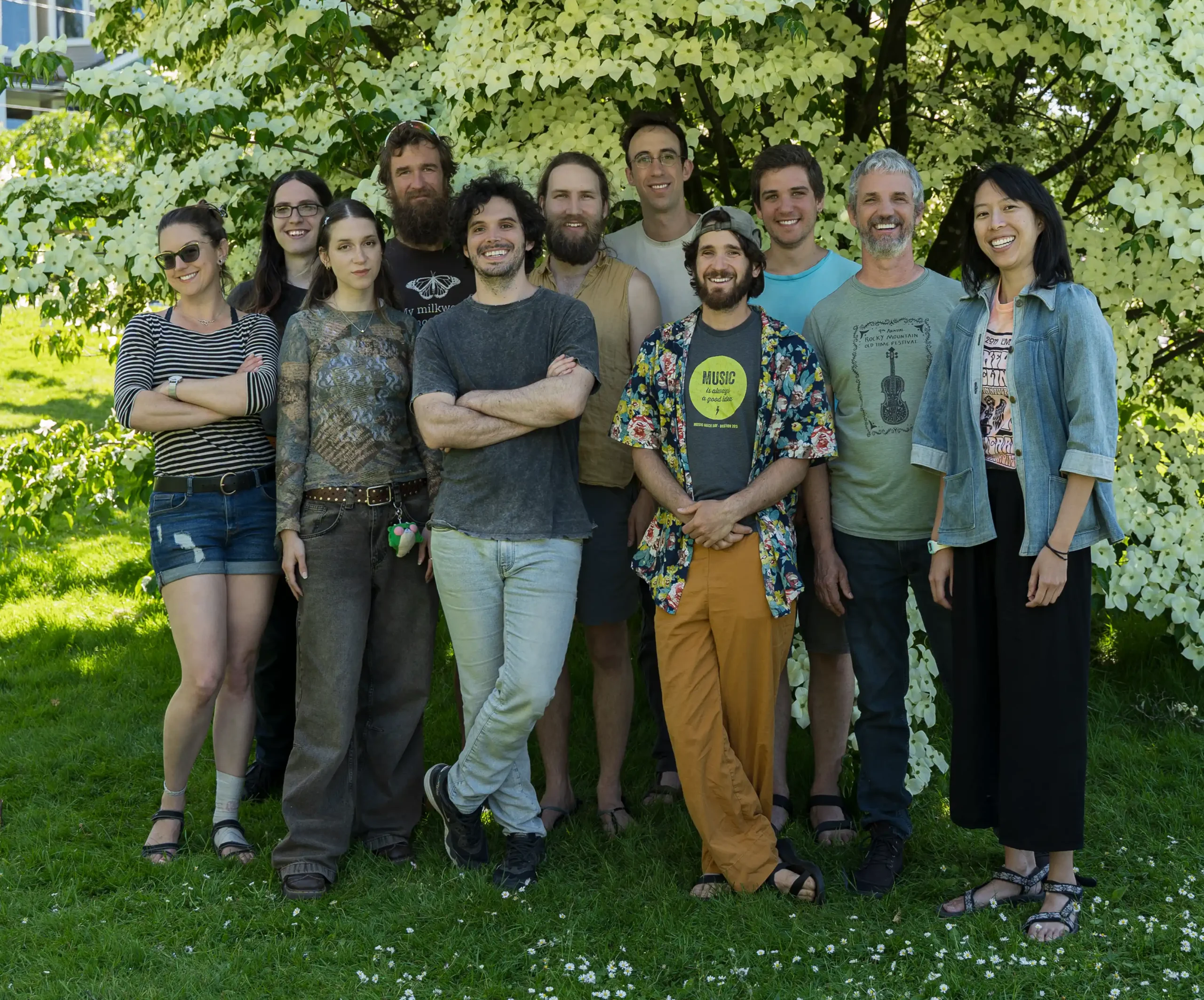
Founded during the COVID-19 pandemic, Interstitial brings together engineers, designers, and communications professionals who share a conviction: technology should serve human flourishing, not just corporate profit. As a worker cooperative and Colorado Public Benefit Corporation, they live
that belief daily in how they govern themselves, how they price their
work, and which clients they choose to serve.
Structure | Worker-owned cooperative incorporated under Colorado cooperative law (C.R.S. Title 7, Article 56) |
Also registered as | Colorado Public Benefit Corporation (PBC) |
Equipo | ~12 worker-owners spanning software, hardware, mechanical engineering, UX, and communications, based across Colorado, New England, and the West Coast |
Pricing | Discounted rates for nonprofits, cooperatives, and open-source projects; market rates for corporate clients |
Profit-sharing | Cross-subsidizes mission-driven work through market-rate client earnings |
Governance | Adheres to the Rochdale Principles of the International Cooperative Alliance |
Affiliations | Member of the US Federation of Worker Cooperatives |
A Pandemic Project
Co-founders Ben Burdette and Chris Chronopoulos had been talking about building something together for years. They met at a hacker space, bonded over electronic instruments and installation art, and kept the idea of a cooperative alive through meetups and side conversations for a long time. COVID-19 gave them the opening to finally act.
“We went hiking, and just decided to do a co-op again,” Ben recalls. Colorado’s cooperative-friendly legal environment made it the right place to incorporate, and a lawyer specializing in co-op law helped them get off the ground.
Since then, the co-op has grown to around a dozen members. Web developers and firmware engineers work alongside a mechanical engineer, a design researcher, UX specialists, and Ian Elwood, a communications professional who spent years doing marketing for nonprofit organizations reaching millions of people. Each has found their niche in a flat, democratic structure held together by shared purpose.
"We come from diverse backgrounds — embedded systems, web development, data science and more — but we share in this common goal: to make the world a better
place through technology. We are engineers, scientists, designers, and architects onboard Spaceship Earth.”
— Interstitial Technology, About Page
Operations and Structure
Interstitial Technology operates as a collective of contractors sharing legal infrastructure, a professional network, and a set of values. When a member finds a project, they draw on the skills of the whole co-op: a web job that turns out to need a hardware engineer, or a mechanical prototyping contract that grows into database and controls work. “We really haven’t found a job yet that uses everyone’s skills at once,” Ben says, “but maybe one day we will.”
Governance is democratic and transparent. Workers hash things out through shared forums and group discussions before decisions are made. The board, elected annually by the full membership, rotates frequently by design: a way of distributing both power and accountability across the co-op. Ben is candid about the tensions this creates. There’s the perennial problem of diffuse responsibility, the “somebody ought to do this, but nobody’s actually on the hook” dynamic that any co-op will recognize. The vision he holds is worth the friction though: “pervasive democracy,” where every worker has a genuine voice and
no one is stuck with someone else’s way or the highway.
Profit-sharing is built into the model, with earnings distributed in part by hours worked. A human rights nonprofit project can be partially funded by revenue from a higher-rate corporate client. Ian Elwood, who joined to help bridge the co-op and the nonprofit sector, has seen this resonate with clients immediately: nonprofits who weren’t sure how they’d afford serious technical help suddenly find themselves with a real partner in their corner.
"That sense of ownership and responsibility is empowering. That’s a big thing for many of us.”
— Dan Fourie, Member
The Mission and the Work
Interstitial’s client roster reads like a catalog of causes. Rates are discounted for nonprofits, cooperatives, and open-source projects; corporate clients pay market rate. Their stated public benefit purposes include encouraging technology as a force for shared prosperity, reducing environmental impact, and cultivating a workplace that supports the health and fulfillment of each member. A few standout projects illustrate the range:
Industrial Electrification
Dan Fourie has worked with startups developing zero-carbon concrete and electrified iron ore reduction, alternatives to coal-intensive blast furnace processes that together account for an estimated 15–20% of global CO₂ emissions. He has also designed high temperature reaction cells for a company prototyping a method for extracting magnesium metal from seawater, a potential alternative to highly carbon intensive mining process that currently supplies this widely used structural material.
"Concrete production contributes 10% of global CO₂ emissions, and steel production is similar. These are the big levers that need to shift if we’re really going to move humanity off fossil fuels.”
— Dan Fourie, Member
Electric Air
A collaborative project spanning mechanical prototyping, database architecture, and control systems for next-generation residential heat pump technology.
BIS-Kit App for Global Rights Compliance
A mobile app serving as a field guide for practitioners investigating human rights violations, built for a global human rights organization.
Automato
Open-source, modular hardware for sustainable grow operations. Designed for makers and small-scale growers who want to automate irrigation and climate control, the open-source board and firmware are a feature as much as a philosophy: the target audience wants to hack the thing.
Circuit Sketcher
An educational web app that lets students design circuits on screen, print them out, and bring them to life with physical components. One of Interstitial’s most collaborative builds, developed by four or five members over time, it’s a favorite example of what the co-op produces when its full range of skills comes together around a shared purpose.
UC Davis Smart Water Heater Database
A tool aggregating energy pricing and clean-energy availability data to determine the optimal time to run a water heater. Currently being prepared for open-source release.
"Interstitial has proven to be an invaluable part of our software-based research project… They have shown a deep commitment to our project’s success beyond pure
deliverables, as well as a dedication to the success of our company as a whole.”
— Jie Qi, CEO and Co-founder, Chibitronics
Open Source Values
Interstitial advocates for releasing client work as open source wherever possible, contributes to global open-source projects, and will point clients toward free existing tools even at the cost of billable work. When a youth climate education nonprofit came to them wanting a custom course platform, Ian recognized the description: it matched Moodle, a free open-source courseware tool already built for exactly that purpose. They sent the client there instead.
Co-founder Ben Burdette is a leading contributor to the Nix Package Manager. The co-op has also released Time Clonk, their internal time-tracking tool, as open source: a small but characteristic gesture from a group that practices what it preaches.
"We believe that good ideas deserve to be shared. Our developers maintain and contribute to open software and hardware projects that are used around the globe.”
— Interstitial Technology
Advice for Aspiring Co-ops
Interstitial carries almost no fixed overhead. If work dried up entirely, the co-op could survive on minimal fees, which gave members the runway to grow gradually and weather dry spells without panic. “It was during the pandemic, when work was changing,” Ben reflects, “and people had a chance to change the way they were working.”
For Colorado-based groups looking to start something similar, Interstitial offers their legal incorporation documents freely. They also recommend the US Federation of Worker Cooperatives as a starting point for education and resources.
"It’s not an easy thing. It’s a messy thing. As a culture, we’re not used to working in cooperatives. There’s a lot of learning that happens. But it’s a kind of work that we need to be doing — we have a society and culture that needs to relearn some of these skills.”
— Dan Fourie, Member
Por qué es importante
The Interstitial team is harder to categorize than a typical consultancy. What holds them together is alignment between how they work and what they work toward: shared ownership, transparent decision-making, equitable profit distribution, and a commitment to technology in service of people. Those values show up in which clients they take, how they price the work, and how they govern themselves every day.
"Technology for a better world.”
— Interstitial Technology
Interstitial Technology is a worker-owned cooperative based in Colorado. Learn more at interstitial.coop or reach out at [email protected]. Technology
professionals interested in joining as a member can apply directly on their website.
Author: Ryan Mazzola
Website: https://interstitial.coop
 Spanish
  English