
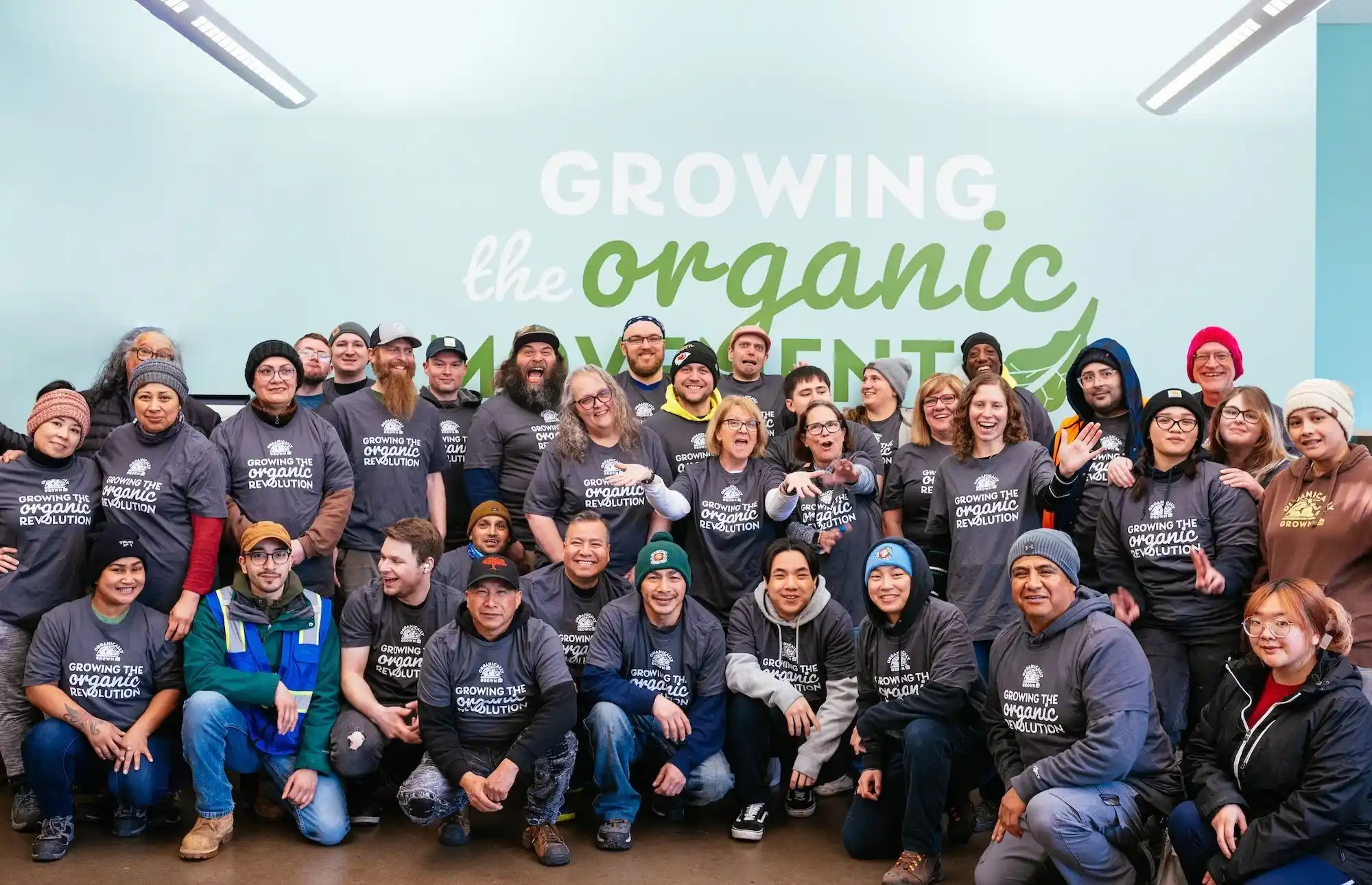
Empresa de cultivo orgánico
“El Fideicomiso de Propósito Perpetuo para la Alimentación y la Agricultura Sostenibles de OGG se compromete a un liderazgo de cuádruple resultado, centrado en las personas, el planeta, el propósito y las ganancias. Esto significa que nos centramos en los impactos económicos, sociales y ambientales positivos, manteniendo nuestra independencia para siempre, inquebrantable.“
-- Del sitio web de OGC
Como lo describe su sitio web, Organically Grown Company (OGC) fue fundada en 1978, “por un grupo de hippies, pequeños agricultores, activistas, amantes de la comida y soñadores que creían que los alimentos y la agricultura orgánicos eran la respuesta para tener personas y un planeta saludables”.”
A medida que los fundadores de OGC se acercaban a la edad de jubilación, buscaban una salida con propósito. Querían vender sus acciones para financiar su jubilación, pero les preocupaba la misión de la empresa de apoyar a los agricultores locales y la agricultura orgánica si inversores externos adquirían una participación mayoritaria. A la dirección de OGC le preocupaba que su estructura anterior, un Plan de Propiedad de Acciones para Empleados (ESOP), regido por la ley federal (ERISA), exigía a la empresa maximizar el valor de las acciones. Esto podría haber forzado la venta de la empresa a un comprador externo que hiciera una oferta alta. Además, la dirección de OGC quería que la empresa creciera sin volverse impersonal ni "venderse". Los fundadores decidieron que un fideicomiso con propósito empresarial era el vehículo perfecto para preservar su misión y ser recompensados por lo que habían construido.
Del Acuerdo Fiduciario de OGC
“El propósito del fideicomiso establecido por este Acuerdo es apoyar los esfuerzos de organizaciones independientes y alineadas con los Valores (incluida, entre otras, la Compañía) que promueven prácticas agrícolas sostenibles y sistemas alimentarios”.
Este propósito establecido garantizó un compromiso con la misión de los fundadores al mismo tiempo que aseguraba salarios más altos que el promedio de la industria, otorgando más de $165,000 en subvenciones a socios alineados con la misión y recaudando más de $50,000 para caridad a través de las ventas para 2022.
”OGC se enorgullece de ser una organización con un propósito definido y propiedad de un fideicomiso, y una empresa de beneficio dedicada a apoyar la agricultura orgánica y al mismo tiempo beneficiar a todos nuestros productores, clientes, compañeros de trabajo y comunidades.
Al equilibrar las ganancias necesarias para apoyar nuestra misión y propósito, demostramos que un negocio puede prosperar y, al mismo tiempo, marcar una diferencia real para las personas y el planeta. En definitiva, podemos invertir todo nuestro esfuerzo en el crecimiento del movimiento orgánico.
-- Del sitio web de Organically Grown Company
TRABAJAR CON PROPÓSITO: TESTIMONIOS DE COMPAÑEROS DE OGC
“Me gusta mucho mi equipo y me gusta trabajar en una organización centrada en principios. Es un privilegio trabajar aquí, en lugar de en un lugar con un modelo de negocio tradicional. También me gustan mucho los productos agrícolas. En Control de Calidad veo que las variedades locales se destacan y me encantan las originales.”
– Justin Dewan, líder del equipo de control de calidad de OGC
“Estoy orgulloso de trabajar para una empresa impulsada por una misión que realmente predica con el ejemplo”.”
– Comentario de la encuesta a compañeros de trabajo
“En OGC, hacemos mucho para contribuir a la comunidad. Además, el compromiso con la sostenibilidad y el apoyo a la producción orgánica son aspectos muy valiosos.”
– Comentario de la encuesta a compañeros de trabajo
“OGC está haciendo un esfuerzo por crear una cultura laboral más diversa y equitativa”.”
– Comentario de la encuesta a compañeros de trabajo
Todos los comentarios de los trabajadores del sitio web de la empresa OGC: www.organicgrown.com/nuestro-equipo
LA LEY EOT DE OREGÓN APOYA LA VIAJE IMPULSADA POR LA MISIÓN DE OGC
OGC creó su Fideicomiso de Propósito Perpetuo para la Agricultura y la Alimentación Sostenibles (SFAPPT) en 2018 como una Compañía de Beneficio de Oregón. Al estructurar el fideicomiso bajo la ley de Oregón como un fideicomiso de propósito perpetuo, OGC eliminó la presión de maximizar las ganancias a corto plazo para los accionistas bajo la ley federal ESOP y garantizó que su misión pudiera continuar indefinidamente. Este objetivo se hizo aún más posible cuando Oregón, el estado donde se encuentra la compañía, adoptó las directrices de UTC en 2019 para modificar la Regla Contra las Perpetuidades, permitiendo un "Fideicomiso de Administración" que puede mantener los activos de una empresa a perpetuidad. Además de su perpetuidad legalmente reconocida, el código actualizado de Oregón permite que un Fideicomiso de Administración evite la posible reducción jurídica de los activos que amenaza a otros tipos de fideicomisos con fines no benéficos.
El nuevo Fideicomiso de Administración de Oregón (ORS § 130.193(4)) ofrece una estructura jurídica inequívoca, brindando confianza a los empresarios que buscan una estrategia de salida alternativa. Un Fideicomiso de Administración puede incluir la representación de múltiples grupos de interés en el Comité del Fideicomiso o puede otorgar el control principal o total a los empleados. Su modelo de gobernanza flexible permite a un comité de administración gestionar las operaciones y garantizar el cumplimiento de los objetivos del fideicomiso, manteniendo el control local y alineado con los intereses a largo plazo de la comunidad y los empleados.
Este tipo de fideicomiso ofrece a los empresarios una estrategia clara de "salida con propósito", sin temor a la venta de su empresa a un comprador externo que podría no priorizar los empleos locales ni el bienestar de la comunidad. Como se vio con el fundador de OGC, que pudo jubilarse sin preocuparse de que el legado y los valores de su empresa se vieran comprometidos por la nueva propiedad. Al establecer un compromiso con la agricultura orgánica, junto con un propósito centrado en los empleados, los empresarios jubilados pudieron consolidar y aumentar su impacto económico local, mejorar las perspectivas de sus empleados y ampliar las donaciones benéficas a la comunidad, integrando sus valores en contextos sociales más amplios de forma indefinida.
 Spanish
  English